
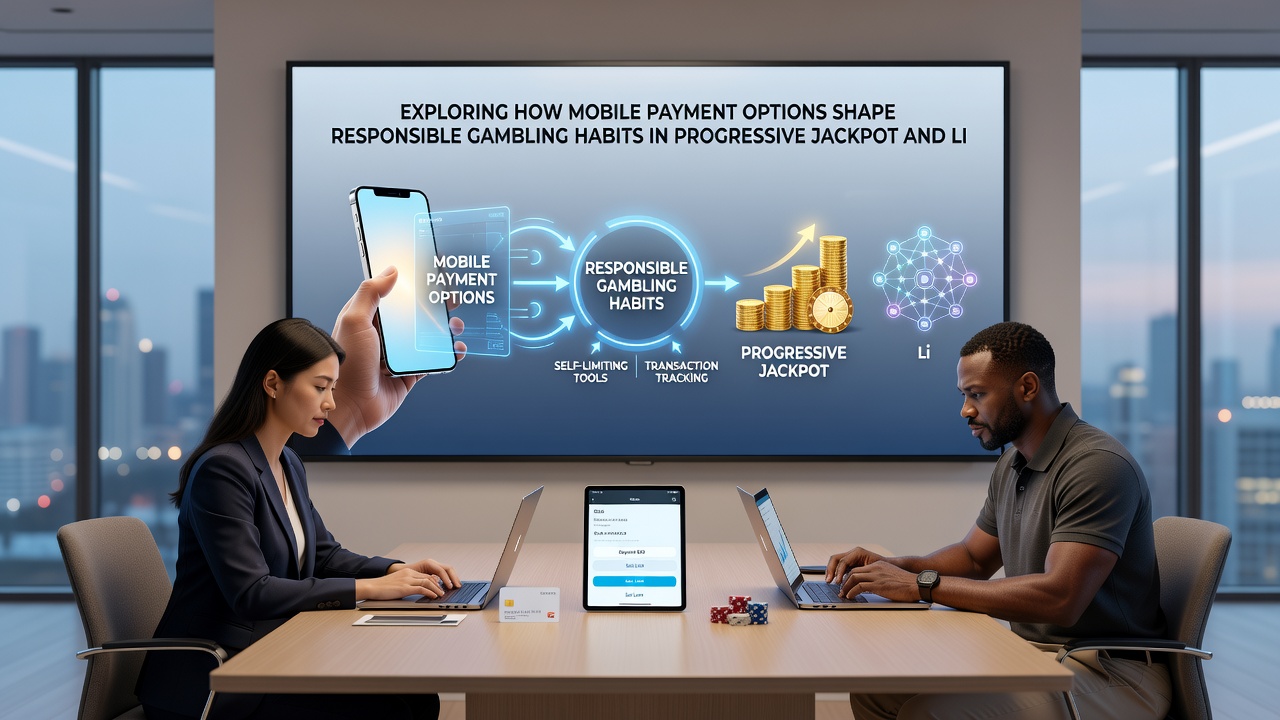
Exploring How Mobile Payment Options Shape Responsible Gambling Habits in Progressive Jackpot and Live Dealer Settings
Digital wallets and instant transfer methods have become standard features across many online gaming platforms, and observers note that these tools connect directly to player spending patterns in environments built around progressive jackpots and live dealer tables. Research from the Australian Institute of Family Studies shows that transaction speed influences deposit frequency, while platform data from 2025 indicates that users who link mobile payments complete an average of 2.3 more transactions per session than those relying on traditional bank transfers. This shift matters because progressive jackpot games accumulate shared prize pools across thousands of players, and live dealer formats maintain continuous real-time interaction that can extend session lengths.
Mobile Payment Mechanics in Casino Environments
Payment applications such as Apple Pay, Google Pay, and regional e-wallet services integrate with casino accounts through tokenization, which reduces the need to enter card details repeatedly. Figures from the European Gaming and Betting Association reveal that 68 percent of operators added at least one mobile wallet option between 2023 and 2025, and those additions coincided with a 14 percent rise in average deposit amounts across participating sites. Yet the same report notes that built-in spending caps and cooling-off prompts often travel with these faster methods, giving platforms new ways to flag unusual activity before larger sums move. In progressive jackpot titles the connection appears especially relevant, since the prize meter climbs with every qualifying bet and mobile users can adjust stake sizes within seconds of seeing an updated total.
Effects on Session Control and Deposit Patterns
Studies conducted by researchers at the University of Nevada Reno tracked 12,000 accounts over 18 months and found that mobile payment users set voluntary deposit limits at a 22 percent higher rate than users of credit card or wire options. The data also showed that accounts with mobile-linked limits reduced monthly spending by an average of 19 percent after the first three months of consistent use. Live dealer sections exhibited similar trends, although the immersive nature of streamed tables sometimes delayed the moment when players checked their remaining budget. Platform logs indicated that push notifications reminding users of pre-set limits reached mobile payment accounts 1.8 times more often than other payment cohorts, suggesting the technology itself creates additional touchpoints for self-regulation.
Progressive Jackpot Dynamics and Payment Speed
Progressive systems pool contributions from multiple games and jurisdictions, so the time between deciding to play and completing a deposit can affect how many spins a player attempts before the meter resets or pays out. Data released in August 2026 by the Canadian Centre on Substance Use and Addiction indicated that players using instant mobile transfers reached the maximum qualifying bet level 31 percent faster than those processing through slower channels. At the same time, the study recorded that these same accounts triggered responsible gambling interventions, such as mandatory breaks or reality checks, at a slightly elevated rate, which researchers attribute to the higher volume of rapid transactions rather than any inherent risk in the payment method itself.
Live Dealer Settings and Real-Time Transaction Feedback
Live dealer streams combine video feeds with chat functions and bet placement windows, creating an environment where payment speed can either support or challenge self-monitoring. Operators report that mobile wallet users receive transaction confirmations within the same interface as the game, which allows immediate visibility into balance changes. According to aggregated platform statistics shared by the American Gaming Association, live dealer tables using mobile payments saw a 17 percent increase in players activating session timers compared with the previous year. The same statistics showed no corresponding rise in total handle, which suggests that the added visibility may help some users maintain predetermined budgets even while the table continues without pause.
Integration of Responsible Gambling Tools
Many jurisdictions now require operators to embed limit-setting, self-exclusion, and activity reports directly into payment flows. Mobile wallets simplify this integration because the same application programming interfaces that move funds can also surface spending summaries before authorization. Evidence compiled by the National Council on Problem Gambling indicates that accounts with mobile payment access viewed their weekly activity reports 27 percent more frequently than accounts using other methods. In progressive jackpot environments the same tools sometimes display current contribution totals alongside personal spend, giving players a side-by-side view that was less common before mobile options became widespread.
Regional Regulatory Developments Through Mid-2026
Regulators in several markets have updated technical standards to require that mobile payment providers transmit real-time balance data to the gaming platform. These changes took effect in parts of Canada and Australia during the first half of 2026, and early compliance reports show consistent application of automated deposit limits. Observers tracking the rollout note that live dealer operators adjusted their interfaces to display limit warnings without interrupting the video stream, while progressive jackpot games incorporated meter information into the same alert window. The result has been a measurable increase in the number of players who pause or reduce stakes after receiving these combined notifications.
Conclusion
Mobile payment adoption continues to intersect with responsible gambling features across both progressive jackpot and live dealer products. Available platform data and regulatory summaries through August 2026 demonstrate measurable shifts in deposit frequency, limit-setting behavior, and session monitoring, although outcomes vary by individual user and game type. Continued collection of transaction-level information will help clarify how these payment tools interact with existing player protection mechanisms over longer periods.